Understanding Child Custody for Russian Citizens in Spain: A Comprehensive Legal Guide
- Home
- Useful information
- Post
Relocating to Spain offers a wealth of opportunities for Russian citizens, from professional growth to an enhanced quality of life. However, when family dynamics shift or marital disputes arise, navigating the complexities of the Spanish legal system can become a daunting task. For Russian expats living in the Iberian Peninsula, understanding the legal nuances of "Опека над детьми" (Child Custody) is essential to ensuring the well-being of their children and the protection of parental rights.
In the context of Spanish law, child custody is not a singular concept but a multifaceted legal framework designed to prioritize the "best interests of the child" (favor filii). For families with Russian roots, these cases often involve private international law, requiring a sophisticated approach that bridges the gap between Spanish regulations and Russian legal expectations.
One of the first hurdles for many Russian parents in Spain is understanding the difference between two fundamental legal concepts: Patria Potestad and Guardia y Custodia. While these are often grouped under the general term of child custody, they represent distinct legal responsibilities.
Patria Potestad (Parental Responsibility): This refers to the global set of rights and duties that parents have toward their children, including their representation and the management of their assets. In the vast majority of cases in Spain, this remains shared (joint) between both parents, even after a divorce. It covers major decisions such as education, religious upbringing, and medical interventions.
Guardia y Custodia (Physical Custody): This refers to the daily care, coexistence, and physical residence of the child. When Russian citizens undergo a separation in Spain, the court must decide whether the custody will be "Shared" (Custodia Compartida) or "Sole" (Custodia Monoparental). In recent years, Spanish jurisprudence has leaned heavily toward shared custody as the default arrangement, provided it serves the child's best interests.
For the Russian-speaking community, "Опека над детьми" (Child Custody) involves more than just local court appearances. There are often cross-border implications. For instance, if one parent wishes to return to Russia with the child, this is legally classified as a relocation and requires either the consent of the other parent or express judicial authorization. Without these, a parent could face charges of international parental child abduction under the Hague Convention.
Furthermore, the Spanish courts will look at the level of integration of the child in Spain—schooling, social circles, and language proficiency—to determine the best living arrangement. For Russian parents, demonstrating a stable environment while maintaining their cultural heritage is a delicate balance that requires expert legal positioning.
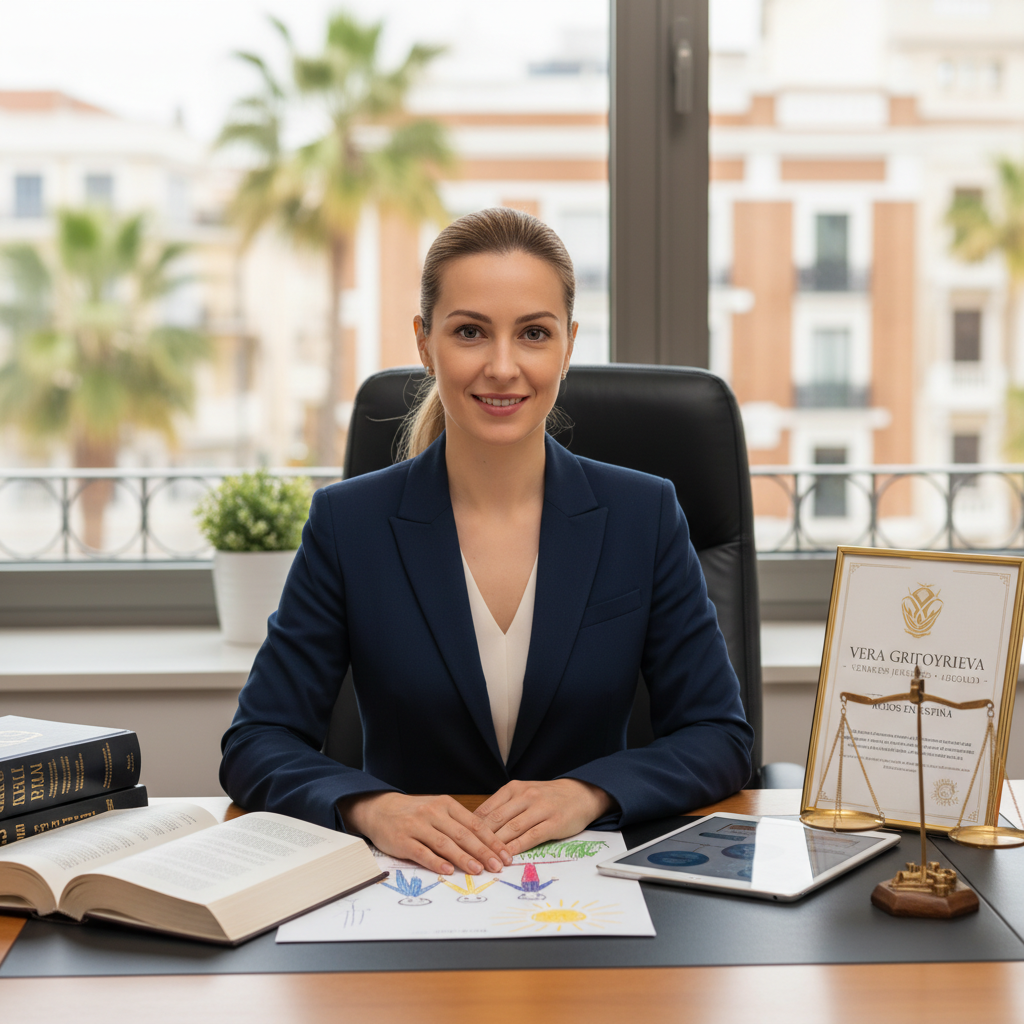
Navigating the Spanish Ministry of Justice and the local family courts requires more than just a translator; it requires a legal advocate who understands the specific cultural and legal hurdles faced by Russians. Vera Grigoryeva provides this essential bridge, offering professional legal services tailored to the Russian-speaking diaspora in Spain.
A specialized lawyer assists in several critical areas:
1. Drafting the Regulatory Agreement (Convenio Regulador): In cases of mutual agreement, a lawyer helps draft a document that outlines custody schedules, visitation rights, and alimony (pensión de alimentos). This document must be ratified by a Spanish judge.
2. Litigation in Contentious Cases: When parents cannot agree, a lawyer must present a robust case in court, often involving psychological evaluations and social worker reports (Gabinete Psicosocial), to argue for the most beneficial custody arrangement.
3. International Recognition of Documents: Ensuring that Russian birth certificates, marriage licenses, and previous court orders are properly apostilled and translated for use in Spanish proceedings.
The Spanish Civil Code and the various regional laws (such as those in Catalonia or Aragon) emphasize that the child’s needs come before the parents' desires. When determining child custody, Spanish judges evaluate the previous involvement of each parent in the child's life, the proximity of their residences, and the child's own opinion if they are of sufficient maturity (usually 12 years or older).
For Russian citizens, it is vital to present a clear "Parenting Plan." This plan should detail how the child will maintain their bilingualism and their connection to Russian culture, as well as how the parents will communicate effectively despite their separation. Professional legal counsel ensures that these cultural factors are presented as an asset to the child’s development rather than a point of contention.
Dealing with child custody issues in a foreign country is emotionally and legally taxing. For Russian parents in Spain, the stakes are incredibly high. The terminology of "Опека над детьми" (Child Custody) encompasses the future stability of the next generation. By seeking professional legal advice, parents can move forward with the confidence that their rights are protected and that their children’s transition through family changes will be as smooth as possible.
Legal expert Vera Grigoryeva remains dedicated to supporting the Russian community through these challenging times, providing the clarity and professional representation needed to navigate the Spanish judicial system successfully. Whether through mediation or litigation, the goal is always a resolution that respects the law and protects the family unit.