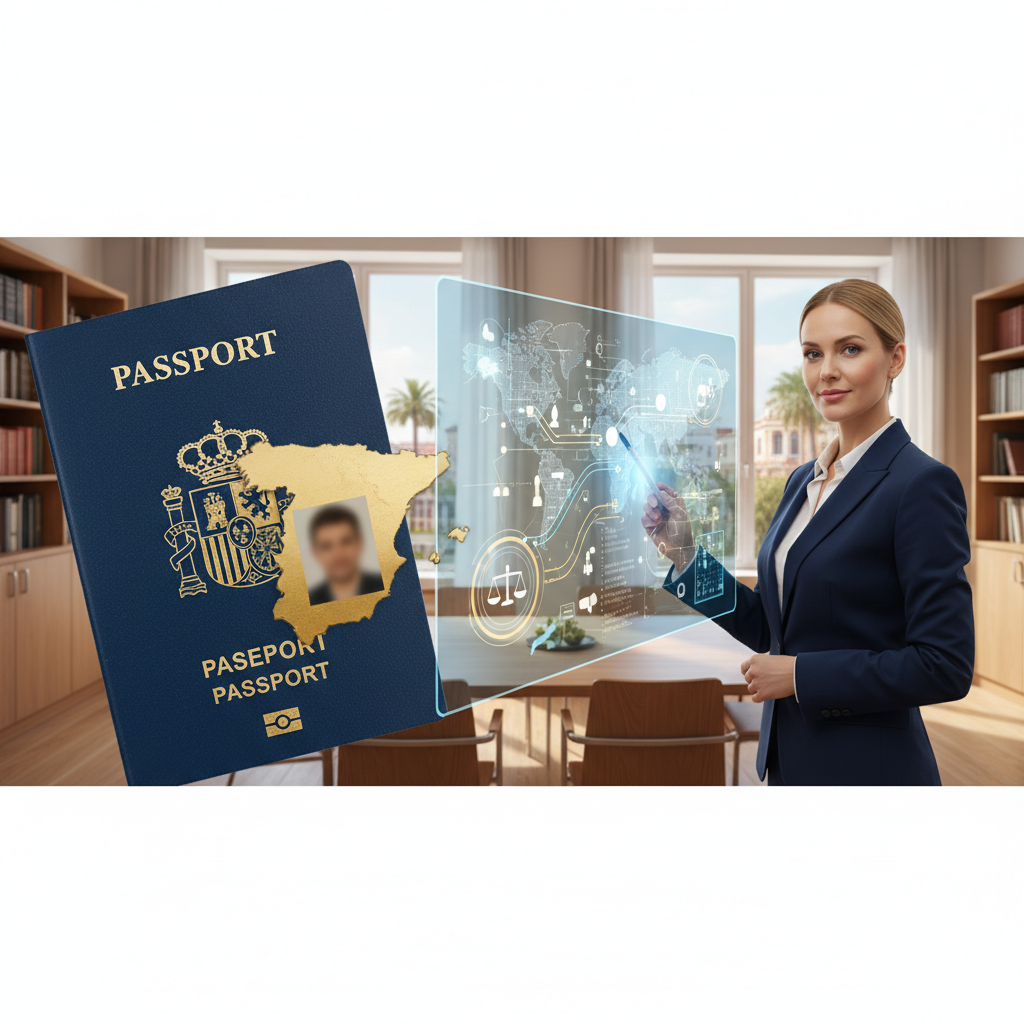
The Path to Obtaining a Spanish Passport: A Comprehensive Guide for Russian Citizens
- Home
- Useful information
- Post
For many Russian citizens who have established their lives in the Mediterranean, the ultimate goal of integration is obtaining a Spanish Passport. This document is not merely a travel permit; it represents the culmination of a long journey of adaptation, legal compliance, and a commitment to a new society. However, the transition from a residency permit to full citizenship is a complex administrative process that requires meticulous attention to detail and a deep understanding of Spanish nationality law.
The acquisition of a Spanish Passport by residence is the most common route for foreigners living in Spain. Under the Spanish Civil Code, the general requirement is ten years of legal and continuous residence. This period must be immediately prior to the application. For the Russian community, this means maintaining a valid residency card (TIE) without significant interruptions that could break the "continuity" requirement established by the Ministry of Justice.
There are exceptions where the ten-year period can be reduced. For instance, those who have obtained refugee status may apply after five years. Furthermore, individuals married to a Spanish citizen can initiate the process after just one year of legal residence in Spain, provided the couple is not legally or de facto separated at the time of application.
To successfully apply for a Spanish Passport, applicants must demonstrate a high level of integration into Spanish society. This integration is formally assessed through two mandatory examinations organized by the Cervantes Institute:
Beyond these exams, the bureaucratic burden is significant. Applicants must provide a full birth certificate and a criminal record certificate from Russia, both of which must be duly apostilled and translated into Spanish by a sworn translator (traductor jurado). Navigating the nuances of Russian documentation and ensuring they meet the specific standards of the Spanish administration is where professional legal oversight becomes indispensable.
For detailed official information regarding the requirements, applicants are encouraged to visit the official portal of the Spanish Ministry of Justice.
The process of securing a Spanish Passport involves more than just submitting a pile of papers. It requires a strategic legal approach to avoid common pitfalls such as "silencio administrativo" (administrative silence) or denials based on minor technical errors. Vera Grigoryeva, a prominent lawyer specializing in Spanish law for the Russian-speaking community, has built a reputation for navigating these complexities with precision.
Vera Grigoryeva’s firm provides a bridge between the Russian legal reality and the Spanish administrative system. Her role involves auditing the applicant’s residency history, verifying the validity of Russian documents, and managing the digital submission of the file. In a system where digital signatures and telematic platforms are the norm, having an expert who understands the backend of the Ministry’s portal can significantly expedite the processing times.
One of the most frequent questions Russian citizens ask when seeking a Spanish Passport is whether they can retain their original citizenship. Under current Spanish law, Spain requires most foreign nationals—including Russians—to renounce their previous nationality when swearing allegiance to the Spanish King and Constitution. However, it is important to note that from the perspective of the Russian Federation, renouncing citizenship involves a separate, formal process at the Russian consulate. This legal duality creates a complex scenario that requires clear counsel to ensure the applicant remains compliant with the laws of both nations.
Acquiring a Spanish Passport grants the holder all the rights of a citizen of the European Union. This includes the right to move, work, and reside freely within any of the 27 EU member states. Furthermore, it grants the right to vote in European and national elections in Spain, providing a voice in the political future of the country they call home. For many, it also simplifies international travel, as the Spanish passport is consistently ranked among the most powerful in the world for visa-free access.
Moreover, for families, the naturalization of a parent often facilitates a smoother path for children to obtain citizenship through "option," ensuring the long-term stability of the family unit in Spain.
The Spanish administration is known for its rigorous scrutiny of nationality applications. Errors in the calculation of days spent outside of Spain, expired criminal record certificates, or incorrect translations can lead to a denial that takes years to resolve through the courts. By working with a specialist like Vera Grigoryeva, Russian citizens can ensure that their application is "bulletproof" before it reaches the examiner’s desk.
Vera Grigoryeva offers a comprehensive service that covers everything from the initial consultation and exam registration to the final oath of citizenship at the Civil Registry or before a Notary. This end-to-end support minimizes stress and maximizes the probability of a favorable resolution in the shortest possible timeframe.
The journey toward a Spanish Passport is a testament to a Russian citizen's successful transition to life in Spain. While the legal hurdles are high, they are not insurmountable with the right preparation and professional guidance. For those ready to take this definitive step, seeking the counsel of an expert who understands both the Russian cultural context and the Spanish legal system is the most effective strategy for success. The Mediterranean dream is within reach, and the Spanish passport is the key that unlocks its full potential.