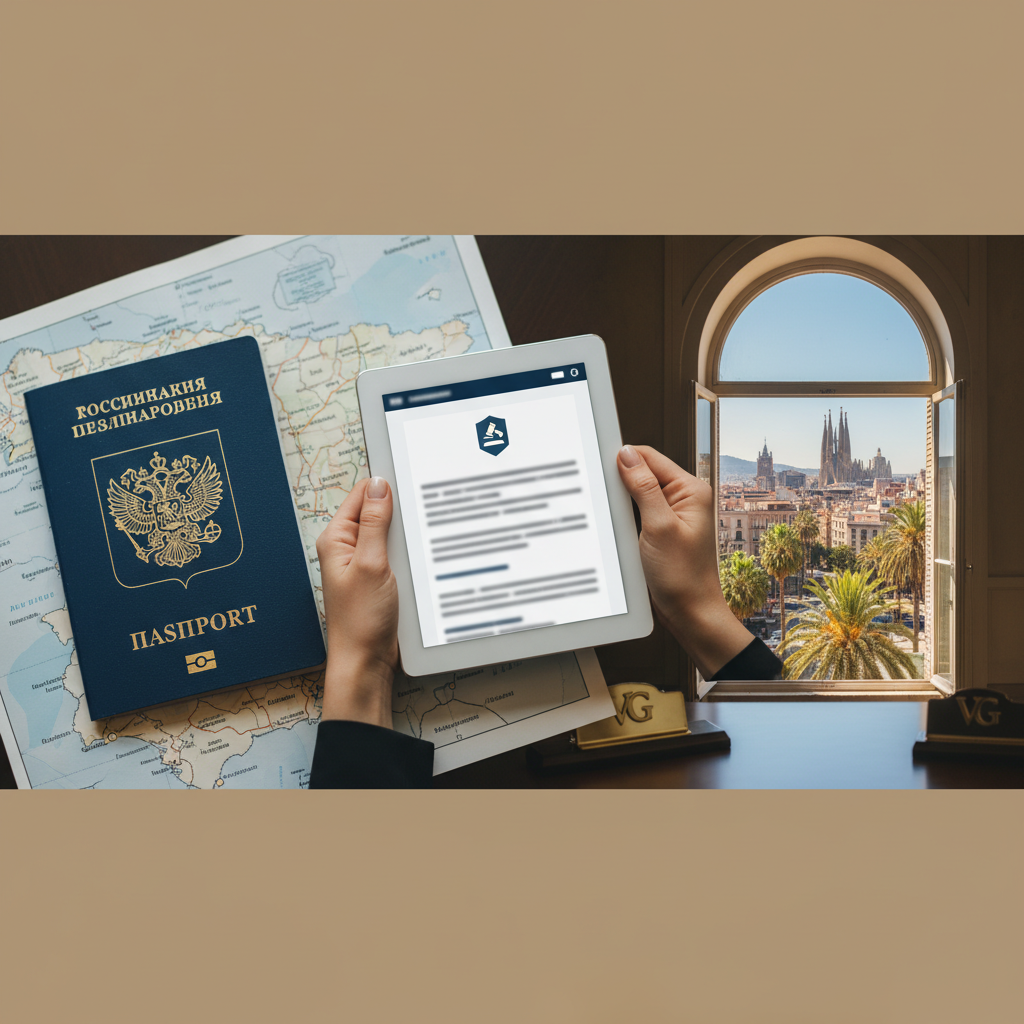
Replacing a Russian Foreign Passport in Spain: A Complete Legal Guide
- Home
- Useful information
- Post
For Russian citizens residing in Spain, maintaining valid identification documents is not merely a matter of convenience; it is a legal necessity. Whether you are living in the Iberian Peninsula under a Golden Visa, a digital nomad visa, or general residency, the process of replacing a foreign passport in Spain (Замена загранпаспорта в Испании) is a procedure that requires foresight, meticulous preparation, and an understanding of both Russian consular regulations and Spanish immigration requirements.
The transition to living abroad often brings about bureaucratic challenges that can become overwhelming. When a passport nears its expiration date, the pressure to renew it increases, as a valid passport is the cornerstone of your legal status in Spain. This guide provides a professional overview of the requirements, the procedural steps, and the legal implications of passport renewal for the Russian community in Spain.
A Russian foreign passport typically has a validity of either five or ten years. It is highly recommended to initiate the renewal process at least six to twelve months before the current document expires. Waiting until the last moment can lead to complications, especially since Spanish residency permits (TIE - Tarjeta de Identidad de Extranjero) are linked to your passport number. If your passport expires, you may face difficulties in renewing your residency, opening bank accounts, or traveling within the Schengen Area.
Under Russian law, citizens living abroad must apply for a new passport through the Consular Departments of the Russian Federation. In Spain, these services are primarily handled by the Embassy in Madrid and the Consulate General in Barcelona. Due to the high volume of requests, securing an appointment can be a lengthy process, making early planning essential.
When considering the process of replacing a foreign passport in Spain, applicants must choose between two types of documents:
1. The Biometric Passport (10 years): This is the most common choice for long-term residents. It contains a microchip with the holder's biometric data (fingerprints) and offers a longer period of validity. The application process involves specialized equipment located at the consulate.
2. The Standard Passport (5 years): This version does not contain biometric data. It is often processed slightly faster in urgent cases but requires more frequent renewals. It is a practical option for minor children whose physical appearance changes rapidly, often necessitating more frequent document updates.
For more detailed information on the official consular fees and technical specifications, citizens are encouraged to visit the official portal of the Embassy of the Russian Federation in the Kingdom of Spain.
The procedure for replacing a passport follows a specific administrative path. Failure to adhere to any step can result in the rejection of the application.
1. Appointment Selection: Everything begins with securing a slot in the electronic queue system of the relevant consulate. Depending on your place of registration in Spain (empadronamiento), you will fall under the jurisdiction of either the Madrid or Barcelona consular district.
2. Documentation Preparation: Applicants must provide their current foreign passport, their internal Russian passport (if available, to avoid additional verification fees), and the completed application form (formular). If the current passport is already expired, the consulate must first perform a "verification of citizenship," which is a separate legal procedure that adds time and cost to the renewal.
3. Submission and Biometrics: On the day of the appointment, the applicant must appear in person. For biometric passports, digital photos are taken on-site, and fingerprints are scanned.
4. Processing Time: Generally, the issuance of a new passport abroad takes between three to four months, as the data must be verified by the authorities in Moscow. Once the document arrives at the consulate, the status can usually be tracked online.
From a Spanish legal perspective, once you have successfully completed the process of replacing a foreign passport in Spain, your duties are not yet finished. You must notify the Spanish immigration authorities (Extranjería) about the change in your passport details.
Since your TIE (Foreigner Identity Card) contains your old passport number, failing to update this information can cause issues at border crossings or during administrative procedures within Spain. A professional legal advisor can assist in filing the necessary "comunicación de cambio de datos" to ensure your Spanish residency records remain accurate and up to date.
Navigating the intersection of Russian administrative law and Spanish immigration requirements can be daunting. Lawyer Vera Grigoryeva specialized in providing legal support for the Russian-speaking community in Spain, ensuring that clients do not fall into common bureaucratic traps. While the consulate handles the issuance of the document, a legal professional provides the necessary bridge to ensure that your life in Spain remains uninterrupted.
Services often include assistance with the online appointment system, the correct filling of complex forms to avoid rejection, and the subsequent notification to Spanish authorities. For families, the process becomes even more complex when dealing with the citizenship and passport requirements of children born in Spain, where "recognition of citizenship" must precede the passport application.
Securing a new passport is a vital task for any expatriate. By understanding the timeline and the requirements for replacing a foreign passport in Spain, Russian citizens can avoid unnecessary stress and ensure their legal standing remains firm. Whether you choose a 5-year or 10-year document, the key to a successful application lies in preparation and, when necessary, seeking expert legal counsel to navigate the complexities of international documentation.