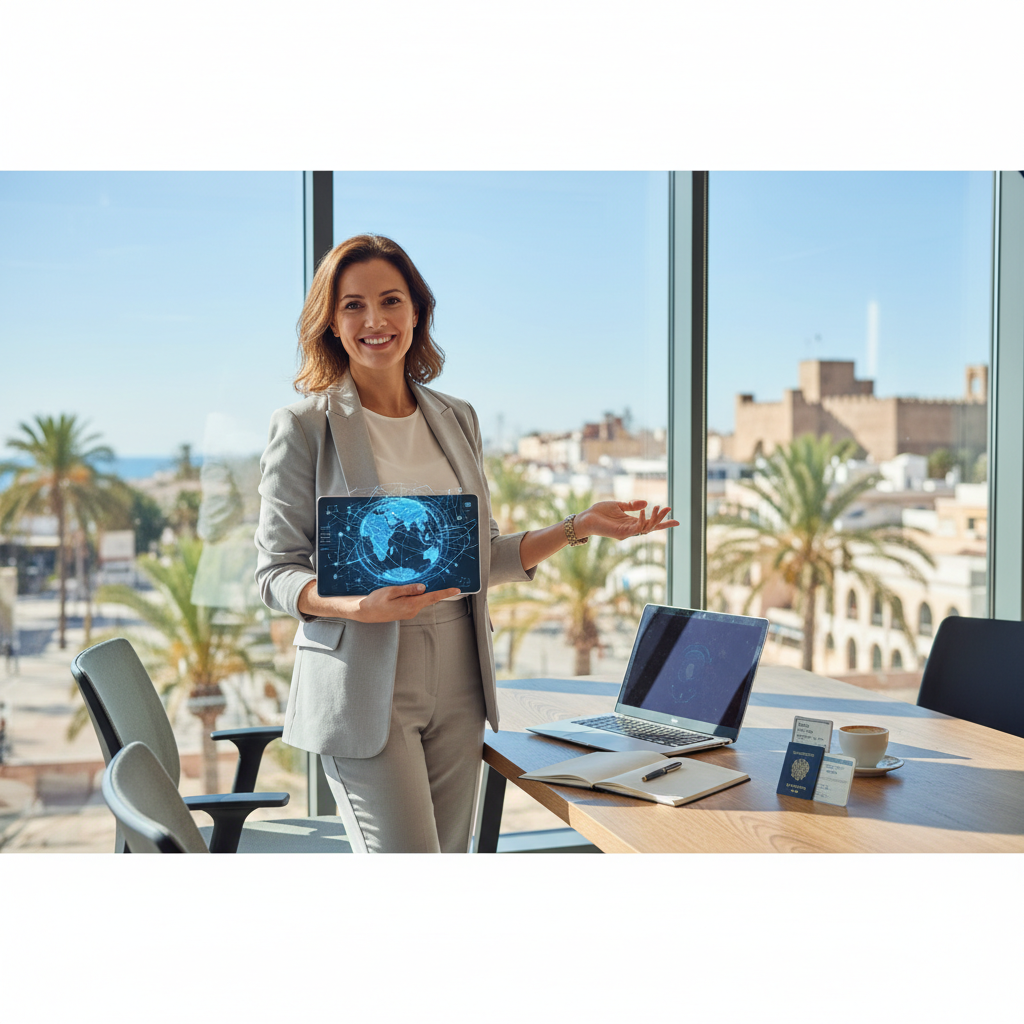
Navigating the Spanish Digital Nomad Visa: A Comprehensive Legal Guide
- Home
- Useful information
- Post
The global shift toward remote work has fundamentally transformed how professionals perceive geographical boundaries. Spain, recognizing this trend, introduced a specialized residency pathway designed to attract international talent. This initiative, part of the Law 28/2022, also known as the "Startup Law," has opened doors for many professionals seeking to balance a high quality of life with their career goals. For many international citizens, particularly those within the Russian-speaking community, the Digital Nomad Visa represents a golden opportunity to settle in the European Union while maintaining their existing professional commitments.
However, while the prospect of living under the Mediterranean sun is appealing, the legal landscape surrounding Spanish residency is complex. Navigating the bureaucratic requirements demands precision, a deep understanding of Spanish administrative law, and meticulous preparation of documentation. This article explores the essential aspects of the Digital Nomad Visa and explains how professional legal oversight can facilitate a seamless transition.
The Digital Nomad Visa is a residence permit that allows non-EEA (European Economic Area) nationals to live in Spain while working remotely for companies located outside of Spanish territory. This visa is specifically tailored for two types of profiles: employees of foreign companies who can perform their duties via telecommunications, and self-employed professionals (freelancers) who provide services to clients globally, provided that no more than 20% of their income comes from Spanish companies.
One of the most significant advantages of this permit is its duration and the path it provides toward permanent residency. If applied for at a Spanish consulate abroad, the visa is typically granted for one year. However, if the application is submitted directly from within Spain (while on a valid tourist stay), the residence authorization is granted for three years, renewable for another two, eventually leading to long-term residency after five years of continuous stay.
To qualify for the Digital Nomad Visa, applicants must meet specific criteria established by the Spanish Ministry of Inclusion, Social Security, and Migration. The requirements are designed to ensure that the applicant is financially self-sufficient and possesses a genuine remote working relationship.
First and foremost is the "Seniority of the Relationship." Applicants must demonstrate that they have been working for their employer or have had a freelance relationship with their clients for at least three months prior to the application. Furthermore, the employing company must have been in operation for at least one year. Documentation such as employment contracts, certificates of incorporation of the foreign company, and letters of authorization for remote work are essential components of the file.
Financial requirements are also strictly enforced. The applicant must prove a minimum monthly income equivalent to at least 200% of the Spanish Minimum Interprofessional Wage (SMI). For 2024, this roughly translates to approximately €2,646 per month for the main applicant. If family members are included in the application, the financial threshold increases: an additional 75% of the SMI for the second person (spouse or partner) and 25% for each additional family member.
Additional requirements include a clean criminal record for the last five years in the countries where the applicant has resided, private health insurance with full coverage in Spain (without copayments), and proof of professional qualification (either a university degree or at least three years of proven experience in the sector).
A major draw for professionals considering the Digital Nomad Visa is the favorable tax treatment. Under the revised Spanish tax regulations, digital nomads may be eligible for a special tax regime often referred to as the "Beckham Law." This allows successful applicants to be taxed as non-residents for a period of six years.
Under this regime, instead of the progressive income tax rates that can reach up to 47% or higher depending on the region, eligible individuals pay a flat rate of 24% on their income earned up to €600,000. This fiscal incentive makes Spain one of the most competitive destinations in Europe for high-earning remote workers and tech professionals. For a detailed breakdown of current tax obligations, applicants can consult the official resources of the Spanish Tax Agency (Agencia Tributaria).
For Russian citizens and other international professionals, the application process for the Digital Nomad Visa involves more than just filling out forms. It requires the apostille of foreign documents, sworn translations into Spanish, and the correct interpretation of Social Security agreements between Spain and the applicant's home country. Mistakes in the application can lead to immediate denials or long administrative delays.
Vera Grigoryeva and her legal team specialize in bridging the gap between Russian-speaking professionals and the Spanish legal system. With extensive experience in immigration law and a deep understanding of the specific challenges faced by Russians moving to Spain, the firm provides end-to-end support. This includes the initial assessment of eligibility, the preparation and submission of the electronic file to the UGE-CE (Unidad de Grandes Empresas y Colectivos Estratégicos), and assistance with the subsequent TIE (Foreigner Identity Card) fingerprinting process once the residency is approved.
The complexity of Spanish bureaucracy should not be a deterrent to achieving a better lifestyle. By entrusting the legal aspects of the Digital Nomad Visa to a qualified lawyer, applicants can focus on their professional growth and their transition to life in Spain, ensuring that every legal requirement is met with precision and authority.
Spain remains one of the most attractive destinations for the global workforce, offering a unique blend of culture, climate, and infrastructure. The Digital Nomad Visa is a robust tool for those looking to legitimize their stay in the country while continuing their international careers. However, success lies in the details of the application. Seeking professional legal counsel is the most effective way to navigate the nuances of the law and secure a positive resolution for you and your family.