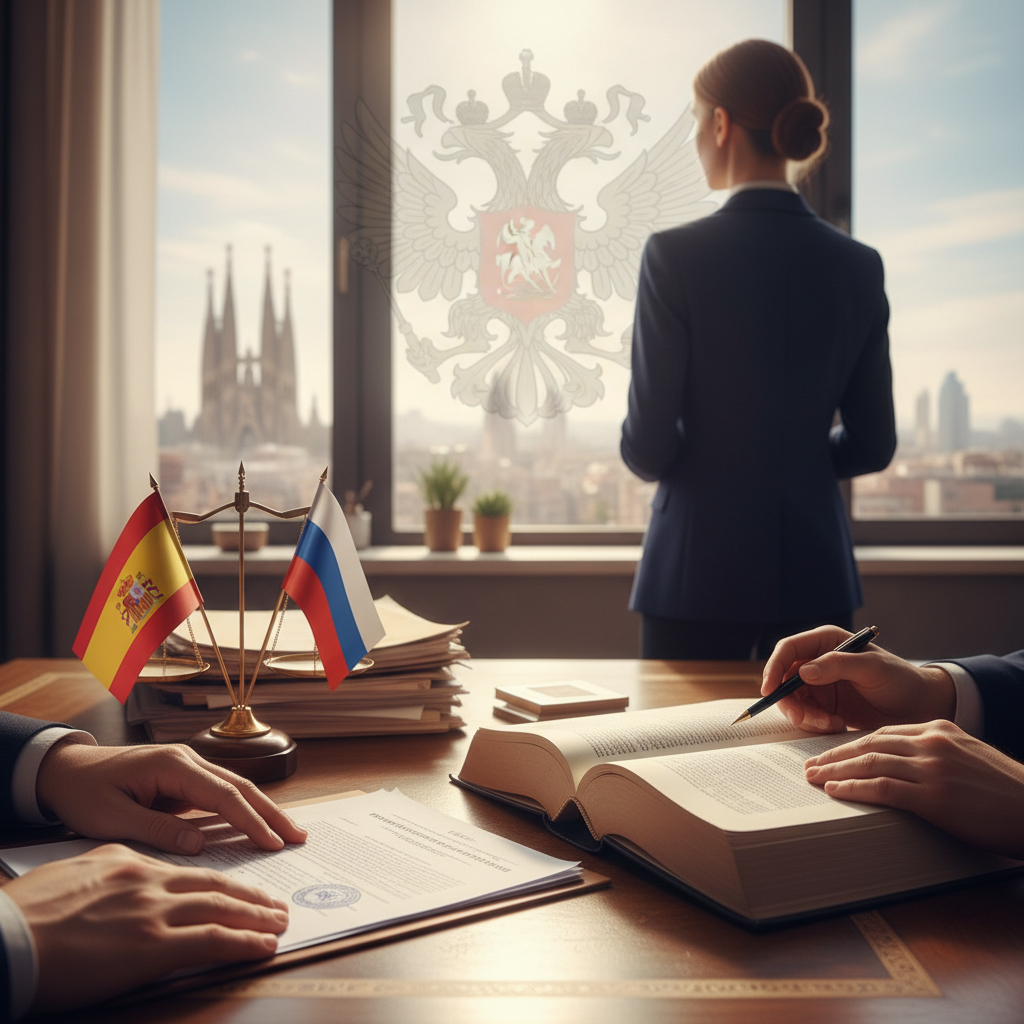
Navigating Civil Disputes in Spain: A Guide for Russian Citizens
- Home
- Useful information
- Post
The legal landscape in a foreign country can often feel like a complex labyrinth, especially when personal or professional disagreements escalate into formal legal confrontations. For Russian citizens residing in or conducting business in Spain, understanding the nuances of the Spanish legal system is crucial for protecting their interests. Civil disputes, known as "Гражданские споры" in Russian, encompass a wide range of legal disagreements between individuals or organizations, focusing on duties and responsibilities rather than criminal acts.
Whether it involves property disagreements, contractual breaches, or family law matters, the Spanish Civil Code provides a structured framework for resolution. However, the procedural differences between the Russian and Spanish systems can create significant hurdles for those unfamiliar with local statutes. This is where specialized legal counsel, such as the services provided by Vera Grigoryeva, becomes indispensable for the Russian-speaking community in Spain.
Civil disputes in Spain are governed primarily by the Spanish Civil Code (Código Civil) and the Law of Civil Procedure (Ley de Enjuiciamiento Civil). These disputes arise when one party believes another party has failed to fulfill a legal obligation or has infringed upon their private rights. For the Russian community in Spain, these cases frequently manifest in several key areas.
Real estate remains one of the most common sectors for litigation. Given the significant investment many Russians have made in Spanish property, disputes regarding purchase agreements, construction defects, boundary lines, or community of owners (Comunidad de Propietarios) issues are frequent. When these disagreements cannot be resolved through amicable negotiation, they enter the realm of formal civil litigation.
Contractual disputes also form a large portion of civil cases. These may involve lease agreements, service contracts, or business partnerships. In the Spanish jurisdiction, the principle of "pacta sunt servanda" (agreements must be kept) is fundamental, but the interpretation of specific clauses often requires expert legal analysis to ensure that the rights of Russian expatriates are fully upheld according to current Spanish legislation.
When a civil dispute reaches the Spanish courts, it typically follows a set of strictly defined stages. The process begins with the filing of a lawsuit (demanda), where the plaintiff outlines their claims and provides supporting evidence. The defendant is then given a specific timeframe to respond. For many Russians, the language barrier and the specific formal requirements of Spanish legal documents make this initial phase particularly daunting.
Before proceeding to a full trial, the Spanish system often emphasizes the "Audiencia Previa" or preliminary hearing. During this stage, the judge attempts to encourage a settlement between the parties, resolves procedural issues, and defines the evidence that will be presented at trial. Navigating this stage requires not only a deep understanding of the law but also strategic negotiation skills to avoid lengthy and costly court battles whenever possible.
If a settlement is not reached, the case proceeds to the "Juicio" (trial), where witnesses are heard and evidence is examined. The judge then issues a ruling. It is important to note that the Spanish judiciary is organized hierarchically, and decisions from lower courts can often be appealed to Provincial Courts or the Supreme Court, depending on the nature of the case and the amounts involved. You can find more detailed information on the structure of the Spanish judicial system on the official website of the General Council of the Spanish Judiciary.
Russian citizens facing civil disputes in Spain encounter unique challenges that go beyond simple legal interpretation. One of the primary obstacles is the integration of international private law. Often, disputes may involve assets located in both Russia and Spain, or contracts that were signed under conditions influenced by Russian law but are being executed in Spain. Determining which jurisdiction applies and which court has the authority to hear the case is a critical first step.
Furthermore, the documentation required in Spanish civil proceedings must be officially translated and, in many cases, legalized or apostilled to be considered valid. Mismanaging these administrative details can lead to the dismissal of a claim or a failure to defend oneself effectively. Having a legal representative who understands both the Russian cultural context and the Spanish legal requirements ensures that no detail is overlooked.
Another significant factor is the duration of legal proceedings. The Spanish court system can be slow, and civil disputes can sometimes take years to reach a final resolution. Professional legal advice is essential for managing expectations and identifying alternative dispute resolution methods, such as mediation or arbitration, which can often provide faster and more cost-effective outcomes for the parties involved.
Engaging a lawyer who specializes in assisting the Russian community in Spain, like Vera Grigoryeva, provides a vital bridge between two different legal cultures. A specialized attorney does more than just translate language; they translate legal concepts and procedural expectations. They ensure that the Russian client's voice is heard clearly within the Spanish courtroom and that their rights are defended with the same vigor as those of a local citizen.
In the realm of civil disputes, proactive legal intervention is often the best strategy. By consulting with a lawyer during the early stages of a conflict—or even before a conflict arises, such as during the drafting of a contract—Russian citizens can significantly reduce their legal exposure. When a dispute becomes unavoidable, having a representative who is well-versed in the intricacies of Spanish civil litigation is the most effective way to ensure a favorable outcome.
Ultimately, civil disputes are about restoring balance and ensuring justice in private dealings. For Russians in Spain, achieving this balance requires a combination of local legal expertise and an understanding of their specific international situation. By relying on professional advocacy, individuals and businesses can navigate the complexities of the Spanish civil system with confidence, ensuring that their life and investments in Spain remain secure and protected.