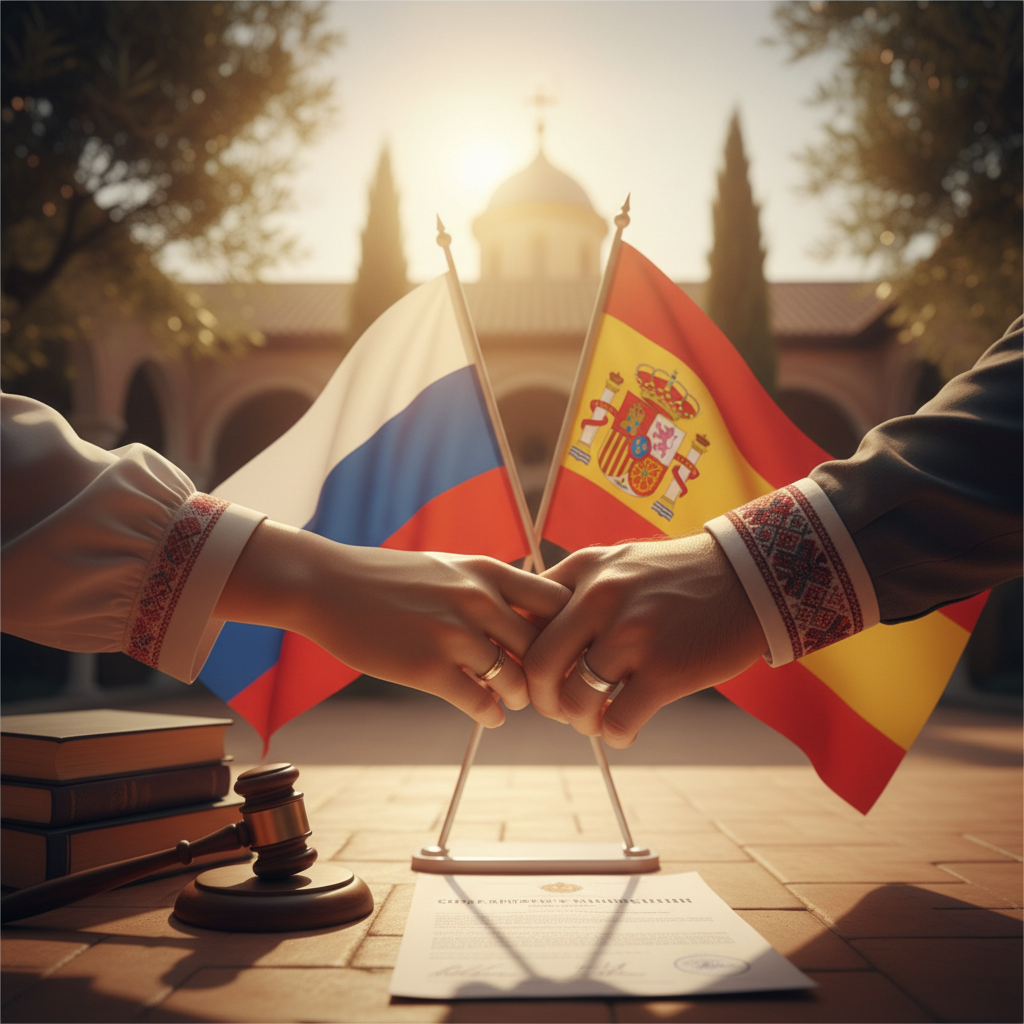
Legal Aspects of Marriage with a Spanish Citizen for Russian Nationals: A Comprehensive Guide
- Home
- Useful information
- Post
Navigating the legal landscape of international unions requires a deep understanding of both local regulations and private international law. For Russian citizens residing in or visiting Spain, the prospect of entering into a marriage with a Spanish citizen (Брак с гражданином Испании) is a significant life event that carries substantial legal implications. Beyond the emotional commitment, this process involves a rigorous administrative procedure designed to ensure the validity of the union and the protection of both parties' rights under Spanish law.
While the prospect of living in the Mediterranean sun is appealing, the bureaucratic journey can be daunting. From gathering the correct documentation in the Russian Federation to passing the mandatory interview at the Spanish Civil Registry, every step must be handled with precision. This is where the expertise of a seasoned legal professional like Vera Grigoryeva becomes indispensable, ensuring that the transition from a foreign national to a family member of an EU citizen is seamless and legally sound.
In Spain, marriage is governed by the Civil Code, which grants equal rights to both domestic and international unions. However, when one of the parties is a non-EU national, the State exercises a higher degree of scrutiny to prevent "marriages of convenience." The process of establishing a marriage with a Spanish citizen begins with the "expediente matrimonial," a pre-nuptial file processed at the Civil Registry (Registro Civil) corresponding to the place of residence of one of the applicants.
Russian citizens must be aware that Spanish authorities will require proof of their legal capacity to marry. This involves proving that the individual is currently single, divorced, or widowed. Since Russia is not a member of certain EU-specific civil status conventions, specific documents must be obtained from Russian authorities, apostilled, and translated by an official sworn translator (Traductor Jurado) recognized by the Spanish Ministry of Foreign Affairs.
The complexity often arises in the nuances of the documents. For instance, the "Certificate of No Impediment" or the "Certificate of Celibacy" must be current—usually no older than three or six months depending on the specific registry's requirements. Failure to provide up-to-date documentation can lead to significant delays or the rejection of the application.
To successfully register a marriage with a Spanish citizen, a Russian national typically needs to provide the following documents:
It is important to consult official government sources for the most current requirements. For detailed information on the legal standards for civil registration in Spain, you may visit the official website of the Spanish Ministry of Justice.
One of the most stressful parts of the process for many couples is the "Audiencia Reservada." This is a private, separate interview conducted by the Civil Registry official. The primary goal is to verify that the marriage with a Spanish citizen is genuine and based on a real emotional bond rather than a desire to obtain legal residency status.
During this interview, the parties are asked personal questions regarding their relationship history, their partner's habits, family background, and future plans. For Russian citizens who may not yet be fluent in Spanish, the presence of an interpreter or the assistance of a legal advisor to prepare for the types of questions asked is highly recommended. Discrepancies in the answers can lead to a "denegación," or a refusal to allow the marriage to proceed, which can have long-term negative effects on the foreign national’s ability to stay in Spain.
Once the marriage with a Spanish citizen is successfully registered and the Marriage Certificate (Libro de Familia) is issued, the Russian spouse becomes eligible for the "Tarjeta de Residencia de Familiar de Ciudadano de la Unión." This is a five-year residence and work permit that grants the holder virtually the same rights as a Spanish citizen, including access to the public healthcare system and the right to work anywhere in the country.
This residency permit is not granted automatically upon marriage; a separate application must be submitted to the Foreigners' Office (Extranjería). The applicant must prove that the Spanish spouse has sufficient financial means to support the family unit and has adequate health insurance coverage (either through the social security system or private insurance).
The intersection of Russian and Spanish law is a specialized field. Vera Grigoryeva provides expert legal counsel tailored to the specific needs of the Russian community in Spain. Navigating the "Extranjería" (Immigration Office) and the "Registro Civil" (Civil Registry) requires not just a knowledge of the law, but an understanding of local administrative practices and potential hurdles.
Engaging a lawyer who speaks both languages and understands the cultural nuances of both nations ensures that documents are prepared correctly the first time, interviews are approached with confidence, and the subsequent residency process is handled efficiently. For a Russian national, a marriage with a Spanish citizen is the beginning of a new chapter; starting that chapter on a firm legal footing is the best way to ensure long-term stability and peace of mind in the Kingdom of Spain.
Establishing a life in Spain through a marriage with a Spanish citizen is a path filled with both bureaucratic challenges and rewarding opportunities. By meticulously preparing documentation, understanding the rigorous interview process, and following up with the correct residency applications, Russian nationals can successfully integrate into Spanish society. Legal guidance from a professional like Vera Grigoryeva serves as a bridge between two distinct legal systems, turning a complex administrative hurdle into a manageable and successful journey.