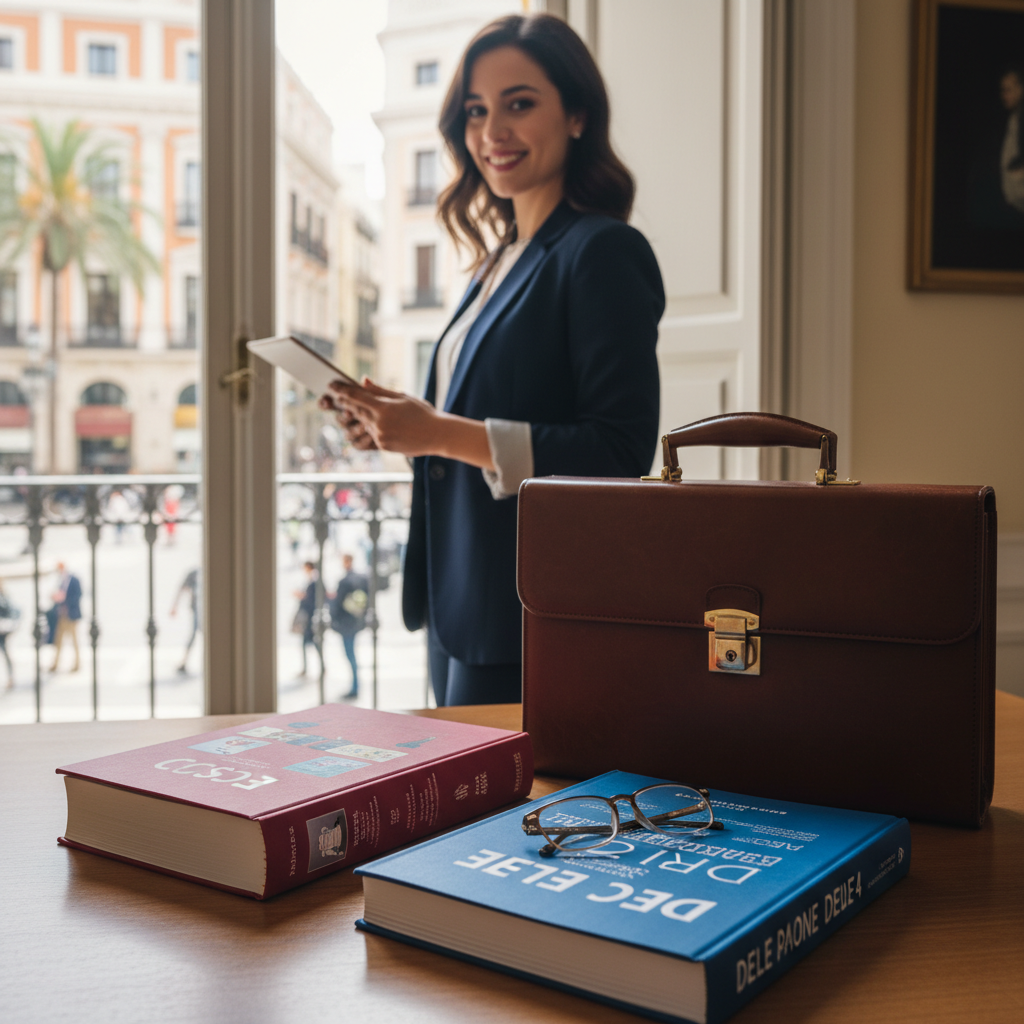
Navigating the Path to Spanish Nationality: A Comprehensive Guide to the CCSE and DELE Exams
- Home
- Useful information
- Post
For many Russian citizens who have made Spain their home, the ultimate goal of their integration process is obtaining Spanish citizenship. This milestone offers numerous benefits, including the right to vote, unrestricted travel within the European Union, and the security of a permanent legal status. However, the administrative journey toward naturalization involves meeting specific criteria established by the Spanish Ministry of Justice. Among the most critical requirements for applicants are the language and cultural proficiency tests, specifically the CCSE and DELE exams.
Understanding these requirements is essential for a successful application. While the process may seem daunting, professional legal guidance can streamline the procedure. Law offices such as those led by Vera Grigoryeva specialize in assisting the Russian-speaking community in Spain, ensuring that every legal nuance is addressed and that candidates are well-prepared for the administrative hurdles ahead.
The first pillar of the citizenship application is the DELE (Diploma de Español como Lengua Extranjera). This is an official title certifying the degree of competence and mastery of the Spanish language, granted by the Ministry of Education and Vocational Training of Spain. For the purpose of obtaining nationality through residency, the Spanish government requires a minimum level of A2 or higher.
The A2 level signifies that the applicant can understand commonly used everyday expressions and participate in basic conversations. The exam is divided into four distinct sections: reading comprehension, written expression and interaction, listening comprehension, and oral expression and interaction. Each section is designed to ensure that the individual can navigate daily life in Spain without significant linguistic barriers.
It is important to note that the DELE certificates do not expire. If an applicant has obtained a level A2 certificate or higher in the past, it remains valid for their citizenship application today. For Russian citizens, achieving this certification is often the most time-consuming part of the process, requiring diligent study and practice. However, certain individuals may be exempt from this requirement, such as those who have completed their secondary or university education in Spain or those from Spanish-speaking countries.
In addition to language proficiency, applicants must demonstrate a fundamental understanding of Spanish society. This is achieved through the CCSE (Conocimientos Constitucionales y Socioculturales de España) exam. Unlike the DELE, which focuses on linguistics, the CCSE evaluates the candidate's knowledge of the Spanish Constitution, the country's political and administrative structure, and Spanish geography, history, and culture.
The CCSE exam consists of 25 multiple-choice questions. To pass, an applicant must correctly answer at least 15 of them. The questions are categorized into two main groups: Government, Law, and the Role of Citizenship in Spain (60% of the exam) and Spanish Culture, History, and Society (40% of the exam). The exam is managed by the Instituto Cervantes, the official institution dedicated to the promotion of Spanish language and culture.
The CCSE certificate is valid for four years from the date of the exam. This provides applicants with a significant window of time to finalize their residency requirements and submit their nationality application. One of the advantages of the CCSE is that the Instituto Cervantes provides an extensive pool of questions from which the exam is drawn, allowing candidates to study specific material in preparation for the test.
Both the CCSE and DELE exams are administered under the strict supervision of the Instituto Cervantes. This organization ensures that the examinations are standardized, fair, and recognized internationally. Candidates must register for these exams through the official portal of the institute, where they can choose exam dates and locations across Spain.
For more detailed information on registration, fees, and exam centers, you can visit the official Instituto Cervantes Exams Portal. It is crucial to monitor registration deadlines, as spots in popular cities can fill up months in advance. Proper planning is a hallmark of a successful citizenship application, and securing an exam date is often the first logistical step.
While the CCSE and DELE exams are mandatory for most, the Spanish legal system recognizes that certain individuals may face extraordinary difficulties in completing these tests. This includes individuals with learning disabilities, those who cannot read or write, or people who have completed specific educational programs within Spain. In such cases, a waiver or an adapted exam may be requested.
Navigating these exemptions requires a deep understanding of Spanish administrative law. Vera Grigoryeva provides essential support in these scenarios, helping clients gather the necessary medical or educational documentation to petition the Ministry of Justice for an exemption. Without professional oversight, these petitions are often rejected, leading to unnecessary delays in the naturalization process.
Obtaining Spanish citizenship is more than just passing two exams; it is about the meticulous preparation of a legal dossier that meets the exacting standards of the Spanish authorities. For Russian citizens, the process involves the translation of foreign documents, the legalization of certificates, and the digital submission of the application via the official "Telemática" platform.
Vera Grigoryeva offers a comprehensive service that goes beyond simple consultation. Her expertise ensures that:
By entrusting this process to a legal professional, applicants can focus on their preparation for the CCSE and DELE exams, confident that the bureaucratic complexities are being handled by an expert who understands both the Spanish legal system and the specific needs of the Russian-speaking community.
The journey toward Spanish nationality is a testament to an individual's commitment to their new home. While the CCSE and DELE exams represent a significant challenge, they are also an opportunity to deepen one's connection with Spanish society and language. With the right preparation and the support of a dedicated legal professional like Vera Grigoryeva, Russian citizens in Spain can navigate this transition smoothly and successfully. Achieving Spanish citizenship is the final step in a long journey of integration, opening doors to a future of stability and opportunity in the heart of Europe.